Ad space available
Your book here
Put your book in front of readers choosing their next Classic Instruction book. Limited to two spots per category.
Timeless lessons from Hogan, Jones, Nelson, Penick and the legends of the game.
Ranked by our editors. Updated November 2026. How we rank
As an Amazon Associate we earn from qualifying purchases. Links to Amazon on this site are affiliate links, which means we may earn a small commission at no extra cost to you. Learn more
Sponsored Paid placements never affect our rankings
Put your book in front of readers choosing their next Classic Instruction book. Limited to two spots per category.
Put your book in front of readers choosing their next Classic Instruction book. Limited to two spots per category.
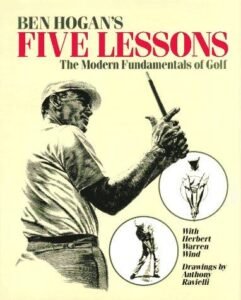
Hogan breaks the swing into five lessons: grip, stance and posture, the first part of the swing, the second part, and a summary. Anthony Ravielli's illustrations made it the most studied instruction book ever written, and its ideas still sit under most modern teaching.
Best for: Any golfer who wants to understand the fundamentals the modern swing is built on
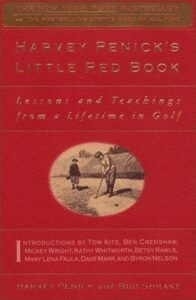
Decades of notes from the teacher of Ben Crenshaw and Tom Kite, written as short, warm lessons. It covers the grip, the swing, the short game and how to think, and it remains the best selling golf book of all time because the advice is so clear and kind.
Best for: Golfers of every level who want simple, wise advice they can use on the next round
Nicklaus explains his full swing, his setup routine and, just as important, how he planned his way around a golf course. His idea of going to the movies, seeing the shot before hitting it, has shaped how players prepare ever since.
Best for: Golfers who want to learn how the greatest major champion thought about the swing and the course
Gallwey applies the ideas from The Inner Game of Tennis to golf: quiet the self that criticizes and controls, and let the body learn through attention. A classic that changed how coaches think about learning.
Best for: Golfers who try too hard and want to learn by awareness instead
Collected from the newspaper columns Jones wrote in the late 1920s, this is beautifully written instruction on rhythm, timing and the mind. Jones writes like a player who understood the game deeply.
Best for: Golfers who want timeless wisdom from the game's greatest amateur
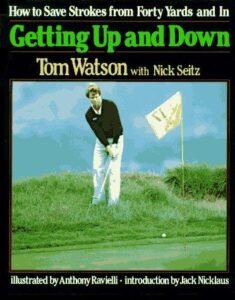
Watson, one of the best scramblers ever, explains chipping, pitching, bunkers and putting in plain language. A classic that is still one of the clearest short game books.
Best for: Golfers who want a champion's guide to scoring around the green
The Silver Scot's best seller is full of plain advice on the swing and especially on scoring: play the shot you can play, not the one you hope to play. Funny, direct and still useful.
Best for: Weekend golfers who want sharp, witty advice on playing smarter
A teacher's classic about learning by feel. Boomer explains how to build a repeating swing through sensations rather than instructions, and the book was a favorite of many tour players for decades.
Best for: Thoughtful golfers who want to understand how feel is learned
Jones looks back on his playing career and explains his thinking about the swing and competition, written with modesty and insight.
Best for: Readers who want Bobby Jones' reflections on his career and method
Jones, who taught himself to play after losing a leg in the First World War, teaches one idea: swing the clubhead, like a weight on the end of a handkerchief. A short, timeless antidote to mechanical golf.
Best for: Golfers who are overthinking positions and want to feel the swing again
Canadian great Knudson, famed for his ball striking, teaches a swing built on balance and motion rather than positions.
Best for: Golfers who want a balanced, flowing swing built on motion
Nelson explains the leg driven, upright swing that won him eleven straight tournaments in 1945. The writing is clear and humble, and the fundamentals hold up well.
Best for: Golfers who want to learn from the player many consider the father of the modern swing
Snead's memoir mixes stories from the tour with insight into his famously smooth swing. Part autobiography and part lesson, it shows how tempo and feel made him one of the winningest players ever.
Best for: Readers who want a funny, honest memoir that teaches as it entertains
Runyan beat the great Sam Snead in a PGA Championship final with his short game. Here he explains his distinctive chipping and putting methods, many of which are still taught today.
Best for: Golfers who want a precise, technical short game method
Four time Open champion Locke explains his famous hook and, above all, his putting method, which made him nearly unbeatable on the greens.
Best for: Golfers who want to learn from one of the greatest putters ever
Hogan's first book, written before his car accident, covers his swing and his approach to the game. It is less refined than Five Lessons but gives insight into how his method developed.
Best for: Hogan fans who want to see his thinking before Five Lessons