Ad space available
Your book here
Put your book in front of readers choosing their next Swing Instruction book. Limited to two spots per category.
Build a better full swing: fundamentals, ball flight and the methods of the great teachers.
Ranked by our editors. Updated November 2026. How we rank
As an Amazon Associate we earn from qualifying purchases. Links to Amazon on this site are affiliate links, which means we may earn a small commission at no extra cost to you. Learn more
Sponsored Paid placements never affect our rankings
Put your book in front of readers choosing their next Swing Instruction book. Limited to two spots per category.
Put your book in front of readers choosing their next Swing Instruction book. Limited to two spots per category.
Hogan breaks the swing into five lessons: grip, stance and posture, the first part of the swing, the second part, and a summary. Anthony Ravielli's illustrations made it the most studied instruction book ever written, and its ideas still sit under most modern teaching.
Best for: Any golfer who wants to understand the fundamentals the modern swing is built on
Decades of notes from the teacher of Ben Crenshaw and Tom Kite, written as short, warm lessons. It covers the grip, the swing, the short game and how to think, and it remains the best selling golf book of all time because the advice is so clear and kind.
Best for: Golfers of every level who want simple, wise advice they can use on the next round
Nicklaus explains his full swing, his setup routine and, just as important, how he planned his way around a golf course. His idea of going to the movies, seeing the shot before hitting it, has shaped how players prepare ever since.
Best for: Golfers who want to learn how the greatest major champion thought about the swing and the course
Written at the height of his dominance, Woods covers every part of the game: full swing, wedges, putting, trouble shots, course strategy and the mental side. The photography is excellent and the explanations are practical rather than theoretical.
Best for: Improving golfers who want a complete, modern system from tee to green
Hardy shows that there are two distinct swing types, one plane and two plane, and that mixing advice from each is why so many golfers get worse. Identify yours and the right fixes become obvious.
Best for: Golfers who keep getting contradictory tips and want to know which ones fit their swing
The book that made Leadbetter the most famous teacher in golf after his work with Nick Faldo. It teaches a swing powered by the big muscles of the body rather than the hands and arms, with clear photos and drills.
Best for: Golfers who want a body driven, athletic approach to the full swing
Former tour player Clampett argues that golfers spend too much time on positions in the backswing and too little on impact. He gives clear checkpoints for a forward leaning shaft, a flat lead wrist and solid, ball first contact.
Best for: Golfers who want to focus on the only part of the swing the ball ever feels
Collected from the newspaper columns Jones wrote in the late 1920s, this is beautifully written instruction on rhythm, timing and the mind. Jones writes like a player who understood the game deeply.
Best for: Golfers who want timeless wisdom from the game's greatest amateur
The result of a major study by the Golf Society of Great Britain, this book modeled the swing as a double pendulum and tested equipment and technique. Many of its findings remain the foundation of golf science.
Best for: Readers who want the original scientific study of the golf swing
Tiger Woods' former coach organizes the game into four cornerstones: the full swing, the short game, the mental game and the physical side. Straightforward, practical and well illustrated.
Best for: Club golfers who want a balanced plan for the full swing, short game and mind
Young focuses on low point control and strike quality, with drills that improve contact without overhauling the swing. Practical and backed by research.
Best for: Golfers who struggle with fat and thin shots
Shoemaker asks golfers to drop the fear of judgment that limits their swing. His exercises, like swinging with eyes closed or throwing a club, help golfers rediscover a natural motion.
Best for: Golfers who are stuck and open to a different way of learning
Sorenstam explains her swing, practice routine, fitness and mental approach, with clear advice for golfers of all levels.
Best for: Golfers who want to learn from one of the greatest women players
The Silver Scot's best seller is full of plain advice on the swing and especially on scoring: play the shot you can play, not the one you hope to play. Funny, direct and still useful.
Best for: Weekend golfers who want sharp, witty advice on playing smarter
Kelley spent decades turning the golf stroke into a system of geometry and physics, with a vocabulary all its own. It is famously dense, but many teachers credit it with giving them a way to describe any swing precisely.
Best for: Teachers and swing nerds who want a complete engineering model of the golf stroke
Haney focuses on ball flight laws and swing plane to explain why the ball curves and how to fix it. It is especially good for slicers, which is most golfers.
Best for: Golfers who slice and want a clear, cause and effect fix
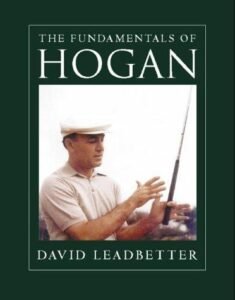
Leadbetter studies Hogan's swing and his famous book page by page, explaining what has held up, what has changed and how an amateur can apply it. A useful bridge between the classic text and modern teaching.
Best for: Fans of Hogan who want a modern teacher's commentary on his method
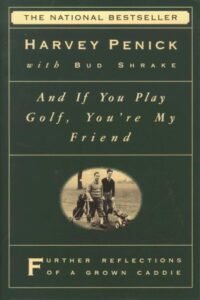
More short lessons and stories from Penick, mixing instruction and the wisdom of a long life in the game.
Best for: Readers who loved the Little Red Book and want more
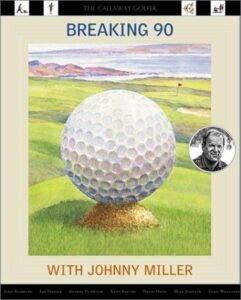
Miller gives everyday golfers simple fundamentals and smart strategy aimed at the break 90 goal, without overloading them with theory.
Best for: Golfers trying to break 90 for the first time
A teacher's classic about learning by feel. Boomer explains how to build a repeating swing through sensations rather than instructions, and the book was a favorite of many tour players for decades.
Best for: Thoughtful golfers who want to understand how feel is learned
Leadbetter's simplified swing for everyday golfers, with a more upright backswing and a shallower downswing that helps players square the face with less effort. It comes with a short daily practice plan.
Best for: Amateurs who struggle with a conventional swing and want a simpler motion
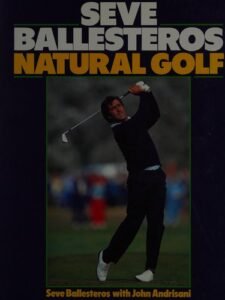
Seve explains how he learned the game as a boy with a single 3 iron on the beaches of Spain, and how that creativity shaped his full swing and his legendary short game.
Best for: Golfers who want to play with imagination and feel
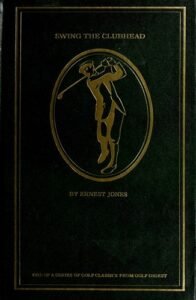
Jones, who taught himself to play after losing a leg in the First World War, teaches one idea: swing the clubhead, like a weight on the end of a handkerchief. A short, timeless antidote to mechanical golf.
Best for: Golfers who are overthinking positions and want to feel the swing again
Top teacher McLean breaks the swing into eight checkpoints, each with clear positions and drills. Useful for golfers who learn best in steps.
Best for: Golfers who like a checkpoint based approach to the swing
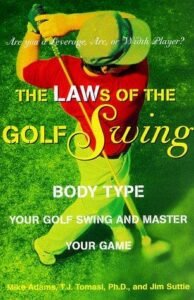
Three top teachers sort golfers into three body types, leverage, arc and width, and show how each should set up and swing. Practical and refreshing for anyone frustrated by one size fits all advice.
Best for: Golfers who want a swing that fits their body type
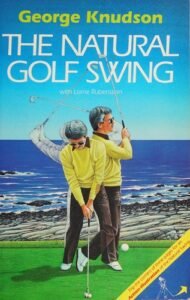
Canadian great Knudson, famed for his ball striking, teaches a swing built on balance and motion rather than positions.
Best for: Golfers who want a balanced, flowing swing built on motion
An engineering professor uses physics and computer models to explain how the swing produces speed and accuracy.
Best for: Technically minded golfers who want to understand swing mechanics
McLean explains the X factor, the difference between shoulder and hip turn, and how it stores power. The idea became one of the most discussed concepts in golf instruction.
Best for: Golfers who want more distance from better body rotation
Miller uses his commentator's eye to break down what the best players do and how amateurs can apply it.
Best for: Golfers who enjoy candid analysis of how tour players think
Nelson explains the leg driven, upright swing that won him eleven straight tournaments in 1945. The writing is clear and humble, and the fundamentals hold up well.
Best for: Golfers who want to learn from the player many consider the father of the modern swing
Bennett and Plummer explain their once controversial method, which keeps weight on the front foot and the body centered to make the low point of the swing more consistent. Detailed and well argued, whether or not you adopt the whole system.
Best for: Experienced golfers looking for a different model that prioritizes solid contact
Snead's memoir mixes stories from the tour with insight into his famously smooth swing. Part autobiography and part lesson, it shows how tempo and feel made him one of the winningest players ever.
Best for: Readers who want a funny, honest memoir that teaches as it entertains
Hundreds of practical drills for the swing, short game and putting, organized by problem.
Best for: Golfers who want a library of drills for every part of the game
Hogan's first book, written before his car accident, covers his swing and his approach to the game. It is less refined than Five Lessons but gives insight into how his method developed.
Best for: Hogan fans who want to see his thinking before Five Lessons
Lopez covers the full swing, short game and putting with clear, encouraging instruction based on her own unconventional but effective game.
Best for: Golfers who want simple, friendly advice from an LPGA legend