Ad space available
Your book here
Put your book in front of readers choosing their next Golf Science & Stats book. Limited to two spots per category.
Strokes gained, biomechanics and the physics of the swing.
Ranked by our editors. Updated November 2026. How we rank
As an Amazon Associate we earn from qualifying purchases. Links to Amazon on this site are affiliate links, which means we may earn a small commission at no extra cost to you. Learn more
Sponsored Paid placements never affect our rankings
Put your book in front of readers choosing their next Golf Science & Stats book. Limited to two spots per category.
Put your book in front of readers choosing their next Golf Science & Stats book. Limited to two spots per category.
Former NASA scientist Pelz used years of data to show where amateurs really lose strokes: the short game. His clock system for wedge distances is one of the most useful ideas in golf instruction.
Best for: Any golfer who wants to save strokes inside 100 yards
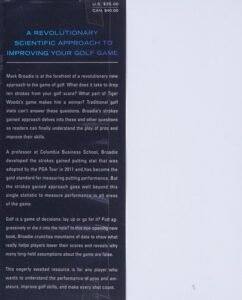
Columbia professor Broadie invented strokes gained, the statistic that changed how tour players and coaches measure performance. He shows that the long game matters more than golfers thought, and gives clear strategy advice backed by data.
Best for: Data minded golfers who want to know where they really gain and lose strokes
Pelz brings his research to the greens, covering stroke mechanics, green reading, speed and practice. His finding that the best speed rolls the ball about 17 inches past the hole changed how many golfers putt.
Best for: Golfers who want a data driven guide to putting
Young applies motor learning research to golf practice, showing why block practice on the range fools us and how variable, game like practice builds real skill.
Best for: Golfers who practice a lot but do not see it carry onto the course
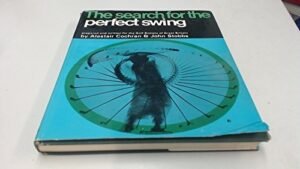
The result of a major study by the Golf Society of Great Britain, this book modeled the swing as a double pendulum and tested equipment and technique. Many of its findings remain the foundation of golf science.
Best for: Readers who want the original scientific study of the golf swing
Leading researchers explain biomechanics, equipment, physics, statistics and psychology in short, well illustrated chapters.
Best for: Golfers who want an accessible, illustrated tour of the science behind the game
Kelley spent decades turning the golf stroke into a system of geometry and physics, with a vocabulary all its own. It is famously dense, but many teachers credit it with giving them a way to describe any swing precisely.
Best for: Teachers and swing nerds who want a complete engineering model of the golf stroke
Detailed anatomical illustrations show exactly which muscles each exercise targets and how that helps your swing.
Best for: Golfers who want exercises that improve their swing and prevent injury
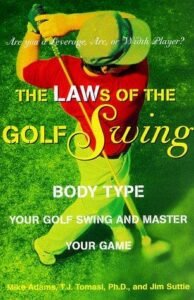
Three top teachers sort golfers into three body types, leverage, arc and width, and show how each should set up and swing. Practical and refreshing for anyone frustrated by one size fits all advice.
Best for: Golfers who want a swing that fits their body type
An engineering professor uses physics and computer models to explain how the swing produces speed and accuracy.
Best for: Technically minded golfers who want to understand swing mechanics
McLean explains the X factor, the difference between shoulder and hip turn, and how it stores power. The idea became one of the most discussed concepts in golf instruction.
Best for: Golfers who want more distance from better body rotation
Bennett and Plummer explain their once controversial method, which keeps weight on the front foot and the body centered to make the low point of the swing more consistent. Detailed and well argued, whether or not you adopt the whole system.
Best for: Experienced golfers looking for a different model that prioritizes solid contact
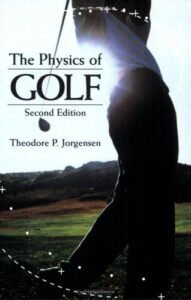
A physicist applies mechanics to the swing, the ball and the club, explaining what really creates distance and spin. Accessible to readers comfortable with basic equations.
Best for: Curious golfers with an interest in physics