🏆 Curated collection

Best Golf Books for Competitive Golfers

For low handicappers, tournament players and juniors chasing their best golf.

15 books, ranked by our editors. Updated November 2026. How we rank

As an Amazon Associate we earn from qualifying purchases. Links to Amazon on this site are affiliate links, which means we may earn a small commission at no extra cost to you. Learn more

#1

Every Shot Counts

Mark Broadie ·2014 ·Intermediate

4.8

Columbia professor Broadie invented strokes gained, the statistic that changed how tour players and coaches measure performance. He shows that the long game matters more than golfers thought, and gives clear strategy advice backed by data.

  • Strokes gained shows where you truly win and lose shots
  • Driving and approach play matter more than golfers assume
  • Use data, not feel, to choose what to practice

Best for: Data minded golfers who want to know where they really gain and lose strokes

#2

How I Play Golf

Tiger Woods ·2001 ·Intermediate

4.5

Written at the height of his dominance, Woods covers every part of the game: full swing, wedges, putting, trouble shots, course strategy and the mental side. The photography is excellent and the explanations are practical rather than theoretical.

  • Build your game from the green back to the tee
  • Have a plan for every shot and commit to it
  • Physical and mental preparation go together

Best for: Improving golfers who want a complete, modern system from tee to green

#3

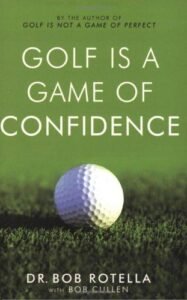
Golf Is a Game of Confidence

Bob Rotella and Bob Cullen ·1996 ·All levels

4.4

Rotella uses stories of tour players he has coached to show how confidence is built, protected and used under pressure. A natural follow up to Golf Is Not a Game of Perfect.

  • Confidence is a choice you make before each shot
  • Train your mind as deliberately as your swing
  • Play to your target, not away from trouble

Best for: Golfers who play well in practice but struggle on the course

#4

The Practice Manual

Adam Young ·2015 ·Intermediate

4.4

Young applies motor learning research to golf practice, showing why block practice on the range fools us and how variable, game like practice builds real skill.

  • Range results can be misleading
  • Variable practice transfers better to the course
  • Use games and challenges to train skills

Best for: Golfers who practice a lot but do not see it carry onto the course

#5

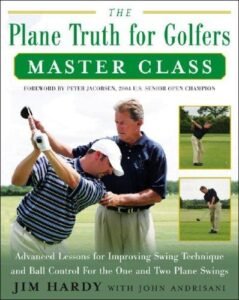
The Plane Truth for Golfers

Jim Hardy ·2005 ·Intermediate

4.3

Hardy shows that there are two distinct swing types, one plane and two plane, and that mixing advice from each is why so many golfers get worse. Identify yours and the right fixes become obvious.

  • Know whether you are a one plane or two plane swinger
  • Advice that helps one swing type can ruin the other
  • Match your setup and body motion to your swing type

Best for: Golfers who keep getting contradictory tips and want to know which ones fit their swing

#6

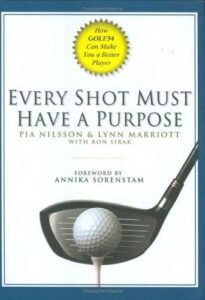
Every Shot Must Have a Purpose

Pia Nilsson, Lynn Marriott and Ron Sirak ·2005 ·All levels

4.2

The coaches behind Annika Sorenstam's success introduce the think box and play box: make decisions behind the ball, then step in and play with full commitment. Practical and influential.

  • Decide in the think box, commit in the play box
  • Every shot deserves a clear purpose
  • Practice the routine, not just the swing

Best for: Golfers who want a clear routine that separates thinking from playing

#7

The Golfer’s Mind

Bob Rotella and Bob Cullen ·2004 ·All levels

4.2

Short chapters, each built around one principle, make this the most practical of Rotella's books. Easy to read in pieces and return to before a round.

  • Have a clear target on every shot
  • Stay in the present shot
  • Think of practice and play as two different modes

Best for: Golfers who want short, practical mental game lessons

#8

Your Short Game Solution

James Sieckmann and Ron Kaspriske ·2015 ·Intermediate

4.2

A respected tour coach's system for wedges, chips, pitches and bunkers, built on a reliable stock motion and adjustments from there. It includes practice plans and performance tests.

  • Build one stock motion, then adjust it
  • Measure your short game with tests
  • Practice skills under conditions like the course

Best for: Committed amateurs who want a modern, structured short game system

#9

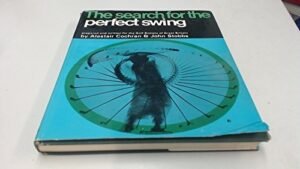
Search for the Perfect Swing

Alastair Cochran and John Stobbs ·1968 ·Advanced

4.1

The result of a major study by the Golf Society of Great Britain, this book modeled the swing as a double pendulum and tested equipment and technique. Many of its findings remain the foundation of golf science.

  • The swing behaves like a double pendulum
  • Timing and sequence create clubhead speed
  • Science can separate myths from facts

Best for: Readers who want the original scientific study of the golf swing

#10

Fearless Golf

Gio Valiante ·2005 ·Intermediate

4.0

Valiante, a sports psychologist to many tour players, explains how fear shows up in the swing and how to play with freedom. He draws on research on motivation and mastery.

  • Fear leads to steering and tension
  • Focus on mastery, not on looking good
  • Pressure is a sign you care, not a threat

Best for: Competitive golfers who tighten up under pressure

#13

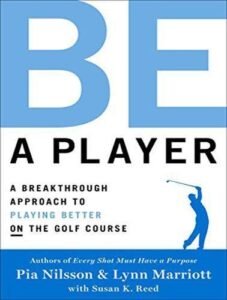
Be a Player

Pia Nilsson, Lynn Marriott and Ron Sirak ·2011 ·Intermediate

3.9

Nilsson and Marriott focus on the human skills of golf: emotional control, focus, balance and tempo. The goal is to play golf rather than play golf swing.

  • Golf is played by people, not swing positions
  • Emotional control is a skill you can train
  • Practice on the range the way you play on the course

Best for: Golfers who want to turn practice range skills into better scores

#14

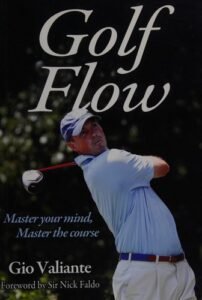
Golf Flow

Gio Valiante ·2013 ·Intermediate

3.7

Valiante describes the flow state that great rounds are made of and how to create the conditions for it more often. Stories from tour players show what flow feels like.

  • Flow comes from clear goals and full attention
  • Train focus on single shots
  • Reduce distractions before the round

Best for: Golfers who want more rounds where everything just clicks

#15

Stack and Tilt Swing

Michael Bennett and Andy Plummer ·2009 ·Advanced

3.6

Bennett and Plummer explain their once controversial method, which keeps weight on the front foot and the body centered to make the low point of the swing more consistent. Detailed and well argued, whether or not you adopt the whole system.

  • Controlling the low point of the swing is the key to solid contact
  • Staying centered over the ball reduces moving parts
  • Every recommendation is tied to a cause in the swing

Best for: Experienced golfers looking for a different model that prioritizes solid contact

More collections

Free weekly newsletter: The Clubhouse Read

One great golf book, every week

Get one book worth reading plus the three ideas to steal from it. Five minutes a week.

🎁 Free when you join: 50 Big Ideas from 50 Golf Books (PDF)

One email every Tuesday. No spam, unsubscribe anytime. Privacy policy