📜 Curated collection

Golf Classics Every Golfer Should Read

The books from before 2000 that still shape how golfers play and think about the game.

25 books, ranked by our editors. Updated November 2026. How we rank

As an Amazon Associate we earn from qualifying purchases. Links to Amazon on this site are affiliate links, which means we may earn a small commission at no extra cost to you. Learn more

#1

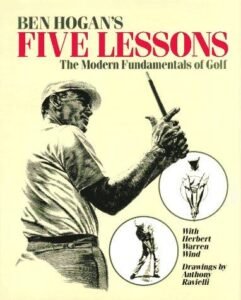
Ben Hogan’s Five Lessons

Ben Hogan and Herbert Warren Wind ·1957 ·All levels

4.9

Hogan breaks the swing into five lessons: grip, stance and posture, the first part of the swing, the second part, and a summary. Anthony Ravielli's illustrations made it the most studied instruction book ever written, and its ideas still sit under most modern teaching.

  • A sound grip and setup decide most of what happens later in the swing
  • The swing plane is a useful picture for keeping the club on track
  • Practice the fundamentals until they are automatic, then trust them

Best for: Any golfer who wants to understand the fundamentals the modern swing is built on
#2

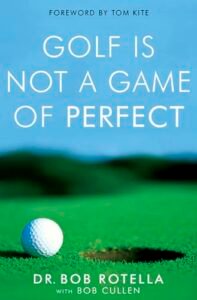
Golf Is Not a Game of Perfect

Bob Rotella and Bob Cullen ·1995 ·All levels

4.9

The best selling book on the mental game, from the sports psychologist who has worked with dozens of major champions. Rotella teaches golfers to play with confidence, accept mistakes, commit to every shot and stop chasing a perfect swing.

  • Commit fully to every shot, even when unsure
  • Accept bad shots and move on to the next one
  • Confidence comes from what you choose to think about

Best for: Every golfer who has ever let one bad shot ruin a round

#3

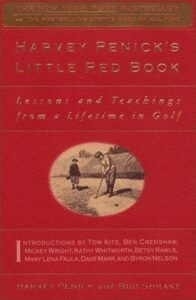
Harvey Penick’s Little Red Book

Harvey Penick and Bud Shrake ·1992 ·All levels

4.9

Decades of notes from the teacher of Ben Crenshaw and Tom Kite, written as short, warm lessons. It covers the grip, the swing, the short game and how to think, and it remains the best selling golf book of all time because the advice is so clear and kind.

  • Take dead aim: pick a small target on every shot
  • Simple feels and images beat long technical checklists
  • A good teacher fixes the one thing that matters most first

Best for: Golfers of every level who want simple, wise advice they can use on the next round

#4

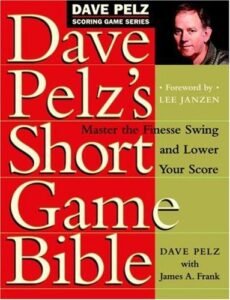
Dave Pelz’s Short Game Bible

Dave Pelz ·1999 ·All levels

4.8

Former NASA scientist Pelz used years of data to show where amateurs really lose strokes: the short game. His clock system for wedge distances is one of the most useful ideas in golf instruction.

  • Most strokes are lost from 100 yards and in
  • Use a clock system of backswing lengths to control wedge distance
  • Practice the short game in proportion to how often you use it

Best for: Any golfer who wants to save strokes inside 100 yards

#5

Golf My Way

Jack Nicklaus and Ken Bowden ·1974 ·Intermediate

4.7

Nicklaus explains his full swing, his setup routine and, just as important, how he planned his way around a golf course. His idea of going to the movies, seeing the shot before hitting it, has shaped how players prepare ever since.

  • Visualize the shot, the flight and the landing before every swing
  • Setup and alignment are where most swing faults start
  • Play to your strengths and manage the course one shot at a time

Best for: Golfers who want to learn how the greatest major champion thought about the swing and the course

#6

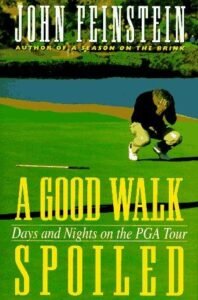
A Good Walk Spoiled

John Feinstein ·1995 ·All levels

4.5

Feinstein spent a year following tour players, from stars to strugglers, during 1994. The result is one of the best selling sports books ever and a vivid look at the pressure of professional golf.

  • Life on tour is far harder than it looks on TV
  • Small margins separate stars from journeymen
  • Every player has a story behind the scores

Best for: Readers who want a behind the scenes look at life on tour

#7

The Inner Game of Golf

W. Timothy Gallwey ·1981 ·All levels

4.5

Gallwey applies the ideas from The Inner Game of Tennis to golf: quiet the self that criticizes and controls, and let the body learn through attention. A classic that changed how coaches think about learning.

  • Self criticism interferes with performance
  • Awareness, not instruction, drives learning
  • Trust the body to find its own way

Best for: Golfers who try too hard and want to learn by awareness instead

#9

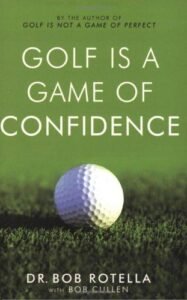
Golf Is a Game of Confidence

Bob Rotella and Bob Cullen ·1996 ·All levels

4.4

Rotella uses stories of tour players he has coached to show how confidence is built, protected and used under pressure. A natural follow up to Golf Is Not a Game of Perfect.

  • Confidence is a choice you make before each shot
  • Train your mind as deliberately as your swing
  • Play to your target, not away from trouble

Best for: Golfers who play well in practice but struggle on the course

#10

The Anatomy of a Golf Course

Tom Doak ·1992 ·All levels

4.4

Renowned architect Doak explains routing, hazards, greens and strategy in an approachable way. After reading it you will never look at a golf hole the same way.

  • Great holes offer strategic choices
  • Routing is the foundation of a course
  • Hazards should reward good decisions

Best for: Golfers who want to understand why great holes work

#11

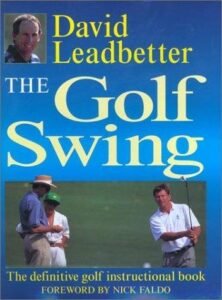
The Golf Swing

David Leadbetter and John Huggan ·1990 ·Intermediate

4.3

The book that made Leadbetter the most famous teacher in golf after his work with Nick Faldo. It teaches a swing powered by the big muscles of the body rather than the hands and arms, with clear photos and drills.

  • Let the body turn drive the swing and the arms follow
  • Good posture and balance make a repeatable swing possible
  • Use simple drills to groove the right feelings

Best for: Golfers who want a body driven, athletic approach to the full swing

#12

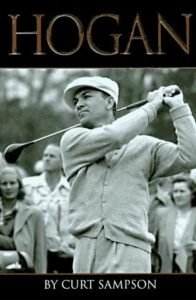
Hogan

Curt Sampson ·1996 ·All levels

4.2

A detailed biography of Ben Hogan, from his hard childhood in Texas to his comeback after a near fatal car crash and his famous 1953 season.

  • Hogan's childhood shaped his relentless drive
  • He came back from a crash to win six more majors
  • His work ethic became legendary

Best for: Readers who want the full story of golf's most mysterious legend

#14

Bobby Jones on Golf

Robert T. Jones Jr. ·1966 ·Intermediate

4.1

Collected from the newspaper columns Jones wrote in the late 1920s, this is beautifully written instruction on rhythm, timing and the mind. Jones writes like a player who understood the game deeply.

  • Smooth rhythm matters more than raw speed
  • Think about the shot, not the mechanics, when playing
  • Golf is played mostly on a five and a half inch course between the ears

Best for: Golfers who want timeless wisdom from the game's greatest amateur

#16

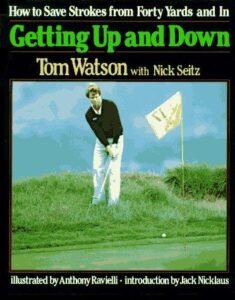
Getting Up and Down

Tom Watson and Nick Seitz ·1983 ·All levels

4.1

Watson, one of the best scramblers ever, explains chipping, pitching, bunkers and putting in plain language. A classic that is still one of the clearest short game books.

  • Get the ball on the ground as soon as possible
  • Pick a landing spot for every chip
  • Firm, confident putts hold their line

Best for: Golfers who want a champion's guide to scoring around the green

#18

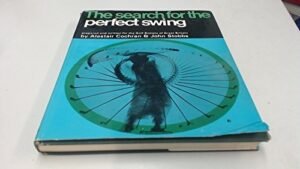
Search for the Perfect Swing

Alastair Cochran and John Stobbs ·1968 ·Advanced

4.1

The result of a major study by the Golf Society of Great Britain, this book modeled the swing as a double pendulum and tested equipment and technique. Many of its findings remain the foundation of golf science.

  • The swing behaves like a double pendulum
  • Timing and sequence create clubhead speed
  • Science can separate myths from facts

Best for: Readers who want the original scientific study of the golf swing

#19

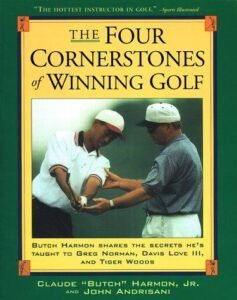
The Four Cornerstones of Winning Golf

Butch Harmon and John Andrisani ·1996 ·Intermediate

4.1

Tiger Woods' former coach organizes the game into four cornerstones: the full swing, the short game, the mental game and the physical side. Straightforward, practical and well illustrated.

  • Improvement comes from all four areas, not just the full swing
  • Simple, repeatable fundamentals hold up under pressure
  • Practice with purpose and a clear goal

Best for: Club golfers who want a balanced plan for the full swing, short game and mind

#21

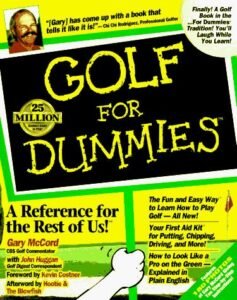
Golf For Dummies

Gary McCord ·1996 ·Beginner

4.0

TV commentator and tour player McCord explains equipment, the swing, rules, etiquette and how to get started, with humor.

  • Start with the basics of grip and setup
  • Etiquette matters as much as rules
  • Have fun while you learn

Best for: New golfers who want a complete, friendly introduction

More collections

Free weekly newsletter: The Clubhouse Read

One great golf book, every week

Get one book worth reading plus the three ideas to steal from it. Five minutes a week.

🎁 Free when you join: 50 Big Ideas from 50 Golf Books (PDF)

One email every Tuesday. No spam, unsubscribe anytime. Privacy policy