📉 Curated collection

Best Golf Books for Lowering Your Scores

For golfers stuck in the 90s and 100s: better contact, smarter decisions and fewer big numbers.

15 books, ranked by our editors. Updated November 2026. How we rank

As an Amazon Associate we earn from qualifying purchases. Links to Amazon on this site are affiliate links, which means we may earn a small commission at no extra cost to you. Learn more

#1

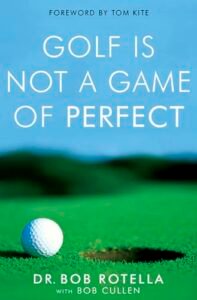
Golf Is Not a Game of Perfect

Bob Rotella and Bob Cullen ·1995 ·All levels

4.9

The best selling book on the mental game, from the sports psychologist who has worked with dozens of major champions. Rotella teaches golfers to play with confidence, accept mistakes, commit to every shot and stop chasing a perfect swing.

  • Commit fully to every shot, even when unsure
  • Accept bad shots and move on to the next one
  • Confidence comes from what you choose to think about

Best for: Every golfer who has ever let one bad shot ruin a round
#2

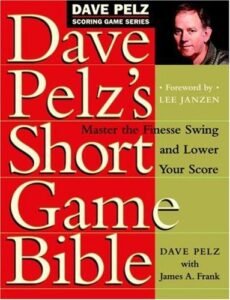
Dave Pelz’s Short Game Bible

Dave Pelz ·1999 ·All levels

4.8

Former NASA scientist Pelz used years of data to show where amateurs really lose strokes: the short game. His clock system for wedge distances is one of the most useful ideas in golf instruction.

  • Most strokes are lost from 100 yards and in
  • Use a clock system of backswing lengths to control wedge distance
  • Practice the short game in proportion to how often you use it

Best for: Any golfer who wants to save strokes inside 100 yards

#3

Every Shot Counts

Mark Broadie ·2014 ·Intermediate

4.8

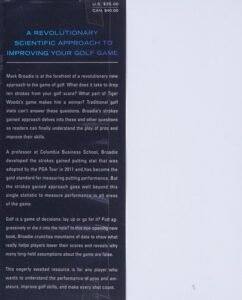
Columbia professor Broadie invented strokes gained, the statistic that changed how tour players and coaches measure performance. He shows that the long game matters more than golfers thought, and gives clear strategy advice backed by data.

  • Strokes gained shows where you truly win and lose shots
  • Driving and approach play matter more than golfers assume
  • Use data, not feel, to choose what to practice

Best for: Data minded golfers who want to know where they really gain and lose strokes

#4

Dave Pelz’s Putting Bible

Dave Pelz ·2000 ·All levels

4.6

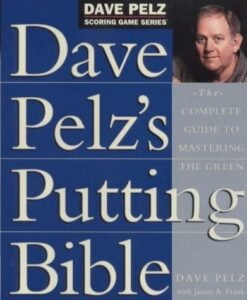
Pelz brings his research to the greens, covering stroke mechanics, green reading, speed and practice. His finding that the best speed rolls the ball about 17 inches past the hole changed how many golfers putt.

  • Roll putts about 17 inches past the hole for the best chance
  • Most golfers underread break
  • Practice speed control as much as line

Best for: Golfers who want a data driven guide to putting

#6

The Practice Manual

Adam Young ·2015 ·Intermediate

4.4

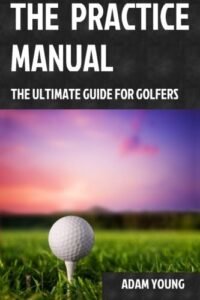
Young applies motor learning research to golf practice, showing why block practice on the range fools us and how variable, game like practice builds real skill.

  • Range results can be misleading
  • Variable practice transfers better to the course
  • Use games and challenges to train skills

Best for: Golfers who practice a lot but do not see it carry onto the course

#7

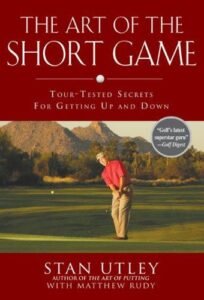
The Art of the Short Game

Stan Utley and Matthew Rudy ·2006 ·All levels

4.3

Short game coach Utley teaches a soft, rotational technique that uses the club's bounce. It has fixed the chipping of countless amateurs and tour players.

  • Let the body rotate and keep the hands quiet
  • Use bounce so the club glides instead of digging
  • A relaxed grip produces softer shots

Best for: Golfers who chunk and skull chips and want a reliable method

#8

The Four Foundations of Golf

Jon Sherman ·2022 ·All levels

4.3

From the founder of Practical Golf, this book organizes improvement into four foundations: strategy, practice, mental game and the basics of the swing. It is grounded in modern stats and written for regular golfers.

  • Smart strategy is the fastest way to lower scores
  • Practice with variety and purpose
  • Expect bad shots: even good golfers hit plenty

Best for: Amateurs who want an honest, practical plan to shoot lower scores

#9

Unconscious Putting

Dave Stockton and Matthew Rudy ·2011 ·All levels

4.3

Stockton, who coached many of the best putters in the world, teaches a quick routine, a focus on the target and a stroke that comes from feel. The goal is to putt without thinking about mechanics.

  • Read the putt from below the hole
  • Use a short, consistent routine
  • Focus on the target and let the stroke happen

Best for: Golfers who freeze over putts and want a simple, confident routine

#10

The Impact Zone

Bobby Clampett and Andy Brumer ·2007 ·Intermediate

4.2

Former tour player Clampett argues that golfers spend too much time on positions in the backswing and too little on impact. He gives clear checkpoints for a forward leaning shaft, a flat lead wrist and solid, ball first contact.

  • Impact is the only position that truly matters
  • A forward leaning shaft at impact compresses the ball
  • Practice drills that train impact directly

Best for: Golfers who want to focus on the only part of the swing the ball ever feels

#12

How to Play Your Best Golf All the Time

Tommy Armour ·1953 ·All levels

4.0

The Silver Scot's best seller is full of plain advice on the swing and especially on scoring: play the shot you can play, not the one you hope to play. Funny, direct and still useful.

  • Play the percentage shot, not the hero shot
  • The right hand delivers power, the left guides
  • Smart decisions save more strokes than swing changes

Best for: Weekend golfers who want sharp, witty advice on playing smarter

#13

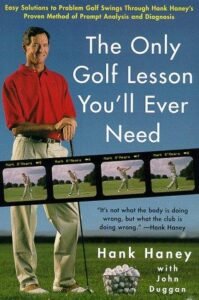
The Only Golf Lesson You’ll Ever Need

Hank Haney and John Huggan ·1999 ·Beginner

4.0

Haney focuses on ball flight laws and swing plane to explain why the ball curves and how to fix it. It is especially good for slicers, which is most golfers.

  • Ball flight tells you what the clubface and path did
  • Most slices come from an open face and an out to in path
  • Fix the cause, not the symptom

Best for: Golfers who slice and want a clear, cause and effect fix

#15

Dave Pelz’s Damage Control

Dave Pelz ·2006 ·Intermediate

3.5

Pelz covers trouble shots, awkward lies and recovery strategy, with the goal of avoiding doubles and triples. Practical advice for the shots most books ignore.

  • The goal after a bad shot is to avoid a big number
  • Know a handful of reliable recovery shots
  • Take your medicine when the odds are poor

Best for: Golfers who want to stop turning one bad shot into a big number

More collections

Free weekly newsletter: The Clubhouse Read

One great golf book, every week

Get one book worth reading plus the three ideas to steal from it. Five minutes a week.

🎁 Free when you join: 50 Big Ideas from 50 Golf Books (PDF)

One email every Tuesday. No spam, unsubscribe anytime. Privacy policy